Internationalisation, Innovation and Collaboration for the Future of Global Education
7 August 2026 | Edinburgh, United Kingdom
Forum Overview
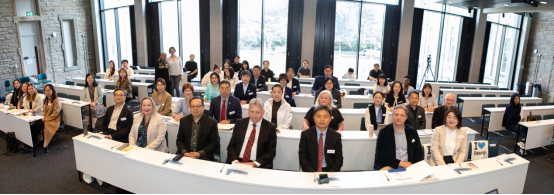
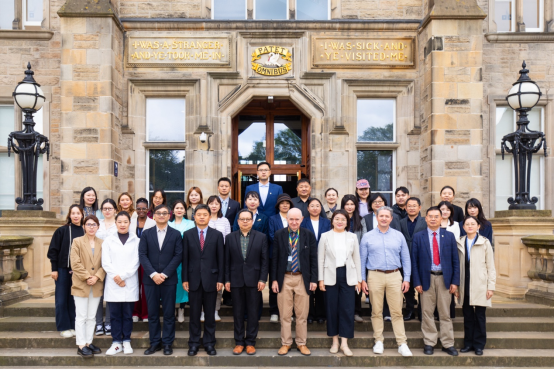
On 7 August 2026, the Global Education Futures Forum: Internationalisation, Innovation and Collaboration for the Future of Global Education was held in Edinburgh, bringing together academics, education leaders, school practitioners and researchers from China and the UK.
The forum was co-hosted by the Internationalisation Futures Network (IFN) at the University of Edinburgh, the Beijing Normal University Education and Training Centre, and the Beijing Normal University Education Group, with support from the Moray House School of Education and Sport and Edinburgh College of Art, the University of Edinburgh.
Designed as a platform for dialogue between universities, schools, education researchers and frontline practitioners in China and the UK, the forum explored interdisciplinary curriculum development, drama education, scientific literacy, creative approaches to arts education and the future of international educational collaboration. Educators from a number of Beijing Normal University affiliated schools travelled to Edinburgh to share examples of curriculum innovation and educational practice from China.
Against the wider context of change in global education, the forum placed particular emphasis on competency development, curriculum innovation and students’ holistic development. Through examples drawn from different educational stages and subject areas, participants explored diverse approaches to holistic education, local cultural inheritance and the cultivation of future-ready learners.
Opening: A Shared Conversation on the Future of Global Education
The opening session was introduced by Dr Farah Akbar, Senior Lecturer at the Moray House School of Education and Sport and a representative of the Internationalisation Futures Network (IFN).
Opening remarks were delivered by Professor Sir Peter Mathieson, Principal and Vice-Chancellor of the University of Edinburgh; Professor Carol Campbell, Head of the Moray House School of Education and Sport; and Professor Zhifeng Hu, Dean of the School of Arts and Communication at Beijing Normal University and Changjiang Scholar Distinguished Professor of the Ministry of Education of China. Their contributions approached the central theme of the forum from complementary perspectives, addressing internationalisation, educational innovation, inclusion and sustained cross-cultural collaboration.
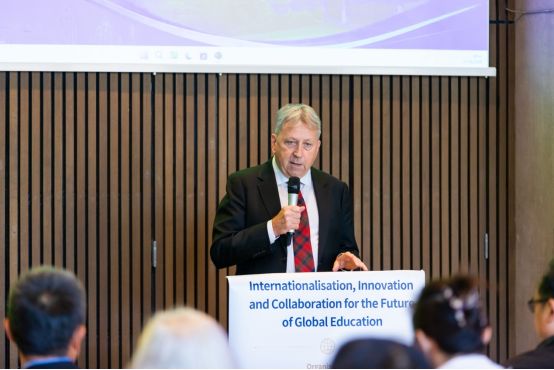
Professor Sir Peter Mathieson
Professor Sir Peter Mathieson reflected on the ideas of authorisation, innovation and the future, highlighting interdisciplinary collaboration and international exchange as important drivers of educational innovation. He noted the close alignment between the forum’s theme and the University of Edinburgh’s longstanding commitment to openness, collaboration across boundaries and future-oriented thinking, and warmly welcomed educators from around the world to engage in meaningful dialogue.
Professor Carol Campbell
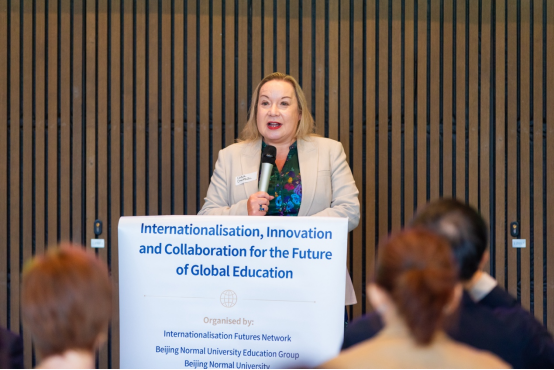
Professor Carol Campbell focused on equity and inclusion in education, emphasising the importance of collaboration in responding to global change. Drawing on Moray House’s commitment to innovation, collaboration and social justice, she highlighted equality, diversity and inclusion as important foundations for education and research. She expressed the hope that cross-cultural and cross-institutional dialogue would enable educators from different backgrounds to share experience, learn from one another and consider more equitable, inclusive and sustainable educational futures.
Professor Zhifeng Hu
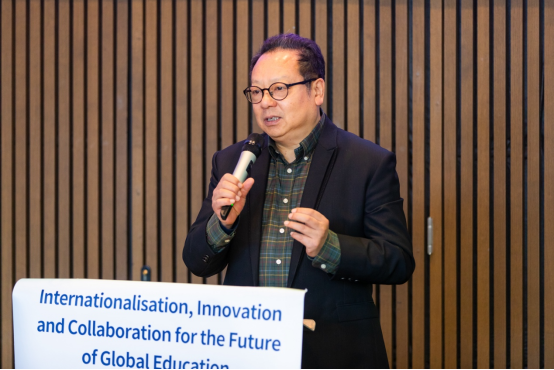
Professor Zhifeng Hu considered the deeper meaning of educational internationalisation from a global perspective. He argued that meaningful international exchange should not be understood as the one-way transfer of educational models, but as an equal dialogue grounded in local educational and cultural contexts. His remarks addressed the relationship between people and technology, the long-term innovative value of the humanities and arts, and the importance of bringing established local practices into international exchange.
Session 1: Educational Innovation and Future-Ready Talent Development
The first session focused on educational innovation and the development of future-ready talent, with three Beijing Normal University affiliated schools presenting examples of curriculum practice.
BNU Taizhou Experimental School
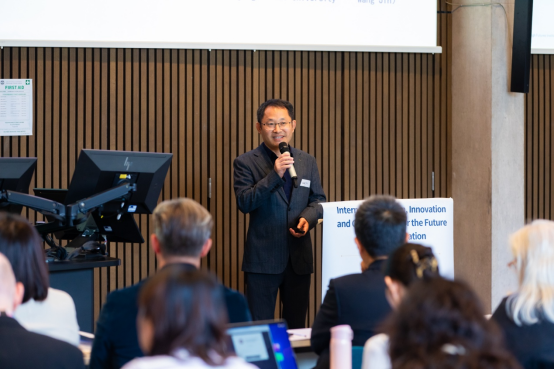
Jin Wang, Secretary of the CPC General Branch Committee of BNU Taizhou Experimental School, presented “MEET Curriculum: School Practice of Interdisciplinary Talent Development through Drama”. Centred on students’ holistic and personalised growth, the school has developed the MEET curriculum around four dimensions: perception, inquiry, practice and critical reflection. Drama serves as a vehicle for interdisciplinary integration across Chinese language, English, arts education and moral education, supporting an integrated model of learning, thinking, creating and performing. Over eight years, the school has staged more than 40 productions, including 11 original works, delivered over 25,000 hours of drama teaching and engaged more than 10,000 students. Looking ahead, the school plans to further develop its curriculum evaluation framework and deepen the integration of artificial intelligence and interdisciplinary drama education.
BNU Nanshan Affiliated School
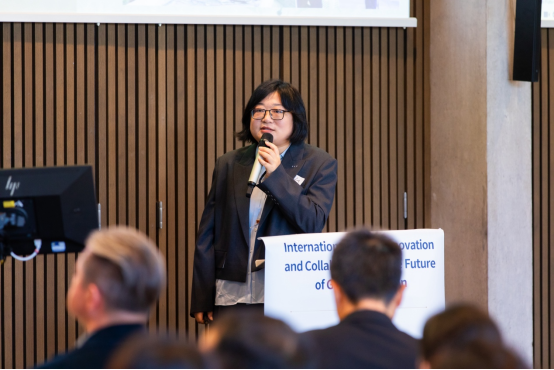
Ning Tian, Deputy Director of Academic Affairs at BNU Nanshan Affiliated School, presented “Rooted in Cultural Heritage, Cultivating Authentic Persons: A K–12 Approach”. The school’s twelve-year education model is built around continuity in curriculum, teaching research, student development and assessment. Different stages use approaches ranging from extended learning programmes, mathematical modelling and life-and-culture education in primary school, to interdisciplinary inquiry in junior secondary education and real-world problem solving, academy-based learning and subject competitions in senior secondary education. The school aims to continue refining an integrated model that supports both holistic and personalised student development.
BNU Asia-Pacific Experimental School: Scientific Literacy
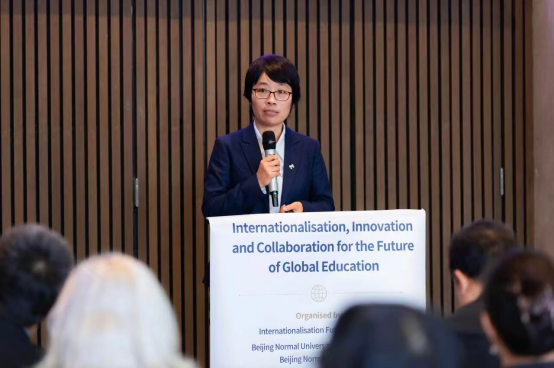
Ali Hong, Head of Teaching in the Senior High School Division of BNU Asia-Pacific Experimental School, presented “Innovative Curriculum Practice for Senior High Students Aimed at Cultivating Scientific Literacy”. Responding to increasingly diverse student needs, the school has established advanced laboratories in earth and environmental science, molecular biology and traditional Chinese medicine, alongside a three-level interdisciplinary curriculum of foundational, extended and applied learning. The presentation emphasised that science education should extend beyond competition results and certificates, enabling students to develop scientific thinking, innovation awareness and social responsibility through authentic inquiry.
Session 2: Creative Pedagogies for Broader Achievement
The second session explored creative pedagogies and broader student achievement through examples from drama, physical education and school-based interest programmes.
BNU Changping Affiliated School
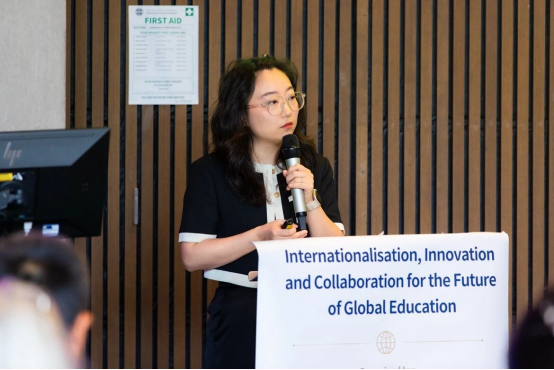
Yang Yang, Deputy Director of Teaching and Learning (Primary) and Drama Programme Lead at BNU Changping Affiliated School, presented “Exploring Educational Drama to Develop Students’ General Learning Capacities”. Drawing on ten years of sustained practice, the school has developed a model integrating reading, thinking and practical capacities. Educational drama supports the full learning process from input and cognitive processing to practical output. Over time, drama has developed from a single arts activity into a comprehensive educational approach spanning subjects and educational stages, supported by university experts, regular teacher development and regional drama education networks.
BNU Asia-Pacific Experimental School: Physical Education
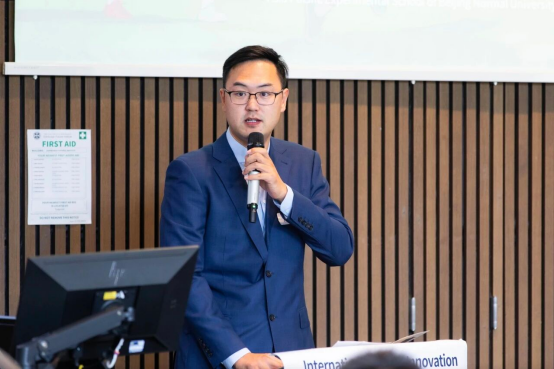
Yu Yan, Lead Practitioner in Physical Education at BNU Asia-Pacific Experimental School, shared work on emotional awareness and resilience through physical education games. The presentation positioned physical education not only as a context for fitness and engagement, but also as an important setting for emotional learning and character development. Through competition, collaboration and trial and error, students encounter a range of emotions; teachers can help them recognise, accept and regulate negative emotions, while process-based reflection can strengthen resilience, empathy and teamwork.
BNU Asia-Pacific Experimental School: Interest-Based Curriculum
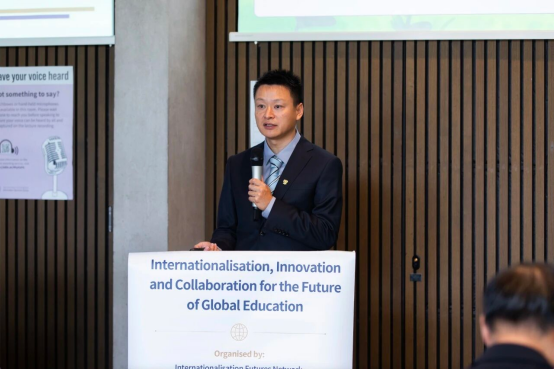
Wenzhi Wu, Lead Practitioner in Physical Education at BNU Asia-Pacific Experimental School, introduced more than two decades of work on interest-based education and distinctive school-based curricula. Since 2001, the school has developed six broad curriculum areas—arts and crafts, sport, arts and humanities, science and technology, practical skills and traditional culture—with more than 140 course groups and over 80 distinctive learning options. The school plans to further expand the international dimension of its curriculum and broaden students’ global perspectives.
Session 3: Interdisciplinary Learning and Cross-Cultural Collaboration
The third session focused on interdisciplinary learning and cross-cultural collaboration, presenting examples that connected local culture, mathematics and Chinese language education with wider international perspectives.
BNU Haikou Affiliated School
Bingrong Lu, Head Teacher of BNU Haikou Affiliated School, presented “Rooted in Local Aesthetic Education, Empowering Cross-Cultural Creativity: Cultivating Creative Talent through Hainan’s Regional Culture”. The school draws on Hainan’s tropical ecology, maritime culture and Li and Miao cultural traditions to create a locally distinctive arts curriculum. Primary pupils work with natural materials such as coconut shells, seashells and mangrove leaves, while junior secondary students engage with intangible cultural heritage including Li brocade, indigo dyeing, pottery and embroidery. Music lessons incorporate Hainan soundscapes, local instruments and comparisons with musical cultures from other countries. The presentation argued that cross-cultural creativity grows from a deep understanding of one’s own cultural roots.
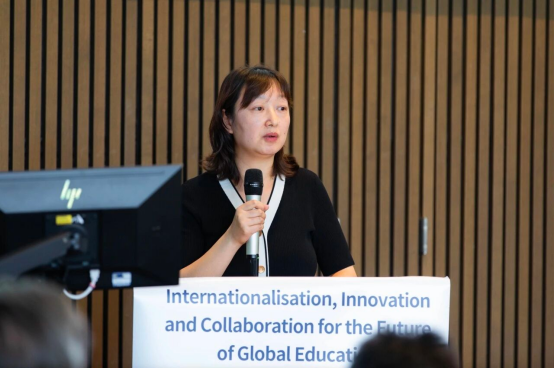
BNU Asia-Pacific Experimental School: Mathematics
Xuli Liu, Lead Practitioner in Mathematics at BNU Asia-Pacific Experimental School, discussed competency-based mathematics education in the context of Beijing’s junior secondary academic proficiency examination reform. As assessment moves from knowledge recall and imitation towards core competencies, classroom learning increasingly asks students to observe the real world mathematically, analyse it through mathematical thinking and express it in mathematical language. The school incorporates real-life modelling, open inquiry, interdisciplinary tasks, student-led problem explanation and question design into classroom practice.
Ruijuan Li, Lead Practitioner at BNU Asia-Pacific Experimental School, presented classroom reform in primary mathematics. Drawing on fourteen years of teaching experience, she outlined work across four areas: redefining objectives, integrating curriculum, transforming classroom practice and iterating assessment. Authentic problems, such as designing improvements to a school car park, are used to move mathematical knowledge beyond textbooks and into real-life contexts, while process-and-outcome assessment supports ongoing observation and feedback on student development.
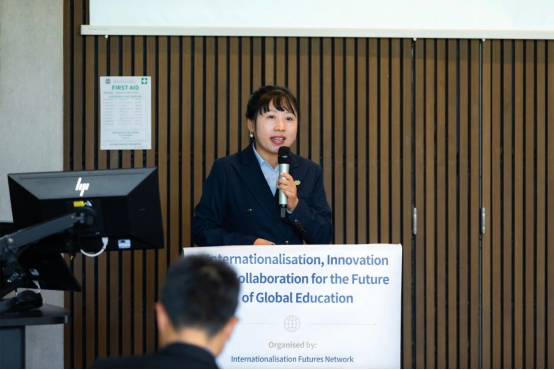
BNU Asia-Pacific Experimental School: Chinese Language and Interdisciplinary Learning
Xueli Ji, Lead Practitioner in Chinese Language and Literature at BNU Asia-Pacific Experimental School, explored the school-based implementation of the “interdisciplinary learning” strand in junior secondary Chinese language education. Drawing on China’s 2022 compulsory education curriculum reform and placing it in dialogue with interdisciplinary learning in Scotland, the presentation considered whether interdisciplinary requirements might dilute disciplinary depth. Examples including micro-theatre adaptations of Rickshaw Boy and visual responses to classical poetry demonstrated how well-designed interdisciplinary learning can strengthen close reading and subject understanding rather than weaken them.
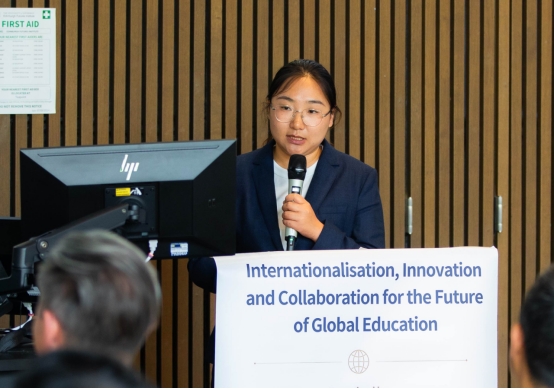
Strengthening Connections Beyond the Forum
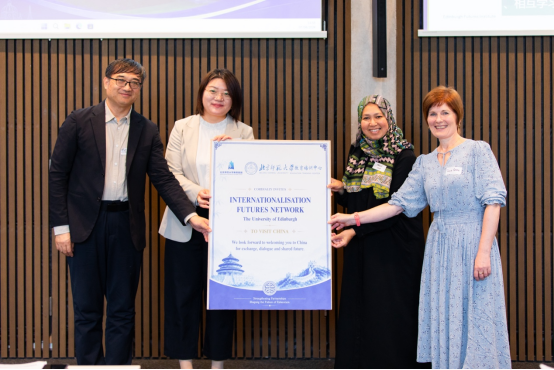
Towards the close of the forum, Zhongmei Xing, Deputy Director of the Beijing Normal University Education and Training Centre and Vice President of the Beijing Normal University Education Group, formally invited representatives from the Moray House School of Education and Sport and the Internationalisation Futures Network (IFN) to visit China and continue the dialogue in Beijing.
The invitation reflected a shared interest in building on the connections established through the Edinburgh forum and exploring further opportunities for collaboration in areas including international education research, teacher professional development, curriculum innovation, interdisciplinary learning and school-to-school exchange.
Participants discussed opportunities to extend the ideas and practices shared during the forum through future visits, academic dialogue, school partnerships and collaborative educational projects. These continued exchanges could provide a foundation for deeper and more sustained connections between the University of Edinburgh and its educational networks and the Beijing Normal University Education and Training Centre and Beijing Normal University Education Group.
Forum Conclusion
Across drama, science, arts education, mathematics and physical education, the forum highlighted a number of shared priorities: competency-oriented learning, interdisciplinary integration and personalised approaches to student development. The event brought frontline educational practice from China into direct dialogue with the Scottish education context and created opportunities for reciprocal learning and exchange.
The conclusion of the forum marked not an end to the conversation, but a starting point for further educational collaboration. Participants expressed a shared interest in continuing cross-cultural dialogue and educational research, exploring approaches that combine innovation with cultural continuity, and contributing to a more equitable, diverse and sustainable future for global education.
Roundtable One: From Curriculum Innovation to Sustainable Educational Practice
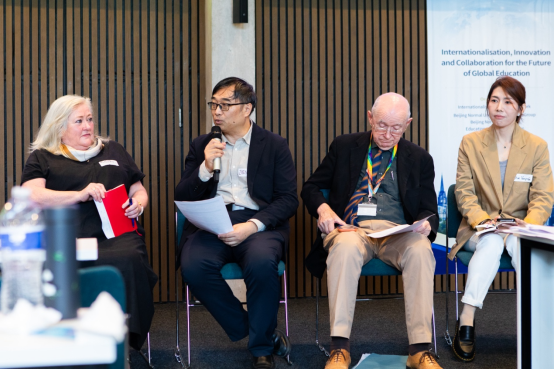
The first roundtable focused on how innovative curriculum models can move beyond theoretical and experimental exploration to become sustainable approaches operating across schools and universities. Experts from the University of Edinburgh, Beijing Normal University (BNU), and the wider school education sector discussed how universities and schools can work together in curriculum development and how barriers between academic research and educational practice can be bridged.
Dr Wendy Timmons, Senior Lecturer in Dance Science and Education at the University of Edinburgh, drew on the University’s experience in developing dance education to illustrate how partnerships with professional organisations, schools and community groups can connect academic learning with professional practice and students’ future development. Since the establishment of the University’s dance-related degree programme in 2009, partnerships with professional organisations, schools and community projects, alongside opportunities for practice-based learning, have provided important foundations for the programme’s continued development.
The discussion also highlighted BNU’s experience of deeper curriculum collaboration between universities and schools. Participants suggested that partnerships between UK universities and primary and secondary schools could similarly move beyond one-off visits and individual projects towards long-term relationships based on the co-design and co-development of curricula.
Professor Zhen Wei, Vice Dean of the School of Arts and Communication at Beijing Normal University; Professor Ren Shengshu; and Dr Derek Williams from Edinburgh College of Art contributed perspectives from arts education, higher education and interdisciplinary practice.
A key consensus emerging from the discussion was that meaningful educational innovation cannot be sustained through individual courses or short-term projects alone. Instead, it requires stable, long-term partnerships between schools, universities and external professional organisations. Such collaboration should begin at the project design stage, enabling partners to reflect together, address real-world challenges and bring their respective expertise directly into curriculum and teaching practice, while also supporting teachers’ professional development and wider knowledge exchange.
Roundtable Two: Creative Pedagogies and Broader Understandings of Achievement
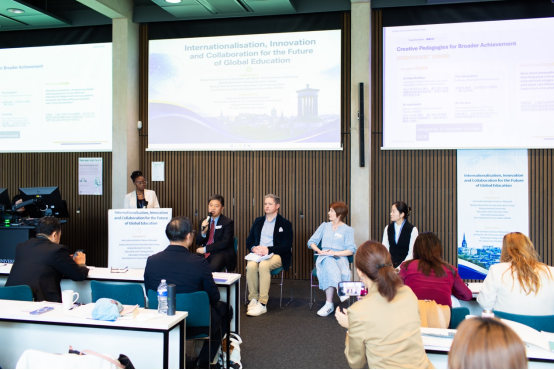
The second roundtable explored how innovative, competency-based approaches to teaching can be implemented across different stages of education and within different national education systems.
The discussion brought together Dr Paul McMillan, Lecturer at the University of Edinburgh’s Moray House School of Education and Sport and President of the Scottish Educational Research Association; Professor Shen Jiliang of Beijing Normal University; Dr Julie Smith, Vice Dean of Moray House School of Education and Sport; and Associate Professor Xiao Yan from BNU’s School of Arts and Communication. Together, they exchanged Chinese and British perspectives and practices relating to the development of creativity and innovation in education.
Participants discussed several ways in which China’s basic education curriculum is responding to the challenges and opportunities presented by artificial intelligence. These included strengthening connections between schools and their communities, developing more integrated curricula that break down conventional disciplinary boundaries, and diversifying the forms and resources through which teaching and learning take place.
The discussion also considered Scotland’s experience of educational reform, highlighting the importance of sustained interaction among different stakeholders. Educational leaders, researchers and teacher educators regularly come together through professional events and annual conferences to share ideas, debate emerging issues, develop new approaches and build collaboration.
Participants emphasised that forums of this kind provide an important opportunity to share educational innovation internationally, understand how innovation takes different forms in different contexts, and learn from one another. Innovation is a dynamic process: ideas may travel between countries and schools, but meaningful change takes time to become embedded. Effective innovation therefore requires adaptation to local contexts rather than the simple transfer or “transplantation” of a model from one education system to another.
Roundtable Three: Interdisciplinary Learning and Cross-Cultural Collaboration
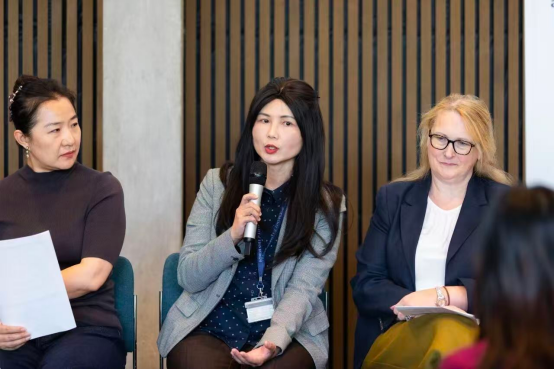
The third roundtable examined how collaboration between universities and schools, as well as between Chinese and British educational institutions, can move beyond individual projects to support sustained interdisciplinary learning.
The discussion brought together Dr Hui-Chuan (Jane) Li, Lecturer in Mathematics Education at the University of Edinburgh’s Moray House School of Education and Sport and Fellow of the Institute of Mathematics and its Applications; Sonia Edwards, Deputy Head (Academic) at St George’s School; and Professor Jie Wang from the School of Arts and Communication at Beijing Normal University.
Participants emphasised that meaningful exchange requires the development of shared values and common goals, while also creating opportunities for students to engage with different cultures and broaden their perspectives.
A key point emerging from the discussion was that an international outlook should not simply be treated as an additional component attached to the curriculum. Rather, it should form part of the curriculum’s core purpose. International education encompasses not only cultural understanding, but also academic capabilities and transferable skills, particularly communication, collaboration and the ability to engage confidently across different cultural and educational contexts.
Councillor Amy McNeese-Mechan: From the City’s History to International Educational Exchange
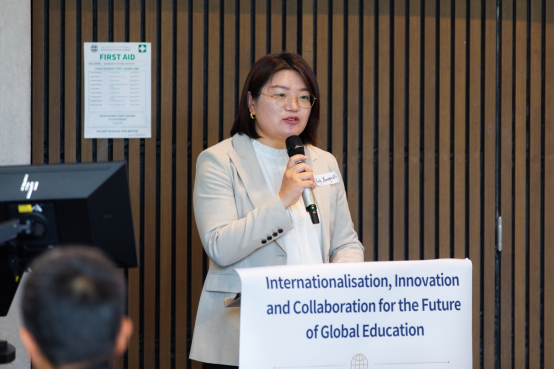
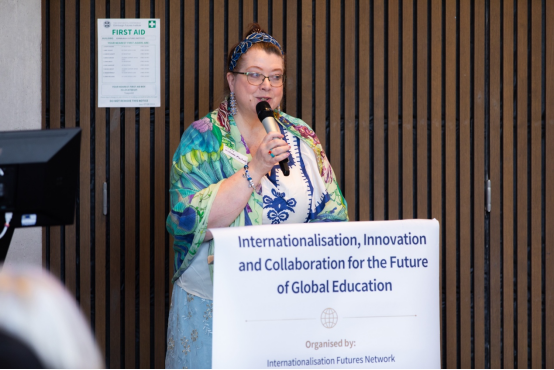
Opening the forum, Councillor Amy McNeese-Mechan warmly welcomed guests from the Chinese and British education communities.
She noted that August is one of Edinburgh’s busiest and most international months of the year. With close involvement in the city’s cultural, arts and science festival organisations, her schedule during the festival season is particularly demanding. Nevertheless, she stressed the importance of the forum’s focus on internationalisation, innovation and global collaboration in education, and expressed her pleasure at joining educators from China and the UK for the occasion.
Councillor McNeese-Mechan also reflected on the particular significance for her of the forum being held at the University of Edinburgh. As an alumna of the University, where she completed postgraduate study and a PhD in Social Anthropology, she recalled her own experience of studying and living in Scotland and her longstanding interest in Scottish culture, history and questions of identity.
Drawing on this background, she highlighted the close relationship between history, culture and education, noting that the ways in which a city and a society understand their own histories also shape how they understand the contemporary world and engage with people from different cultural backgrounds.
Turning to international exchange, she described Edinburgh as a city with a strong international outlook and a long tradition of building connections around the world through education, culture and city-to-city engagement. She also highlighted Edinburgh’s longstanding links with Chinese cities, including Xi’an and Shenzhen, which continue to create opportunities for deeper educational, cultural and youth exchange.
She concluded by encouraging participants not only to engage fully with the forum, but also to experience Edinburgh’s culture, history and international atmosphere during its most vibrant month of the year. She expressed the hope that the gathering would provide a new starting point for sustained and deeper educational and cultural collaboration between China and the UK.
Xing Zhongmei: Building Sustainable China–UK Partnerships in Education
Xing Zhongmei, Deputy Director of the Education and Training Centre of Beijing Normal University and Vice President of the Beijing Normal University Education Group, noted that the forum had created a valuable platform for dialogue under the themes of “internationalisation, innovation and collaboration”, connecting university research, classroom practice in primary and secondary education, and wider approaches to educational development.
Drawing on BNU Education Group’s experience in connecting university and school education, promoting innovation in basic education and developing international educational exchange, she emphasised the need to build sustainable models of collaboration across different stages of education, promote students’ holistic development through diverse approaches to teaching and learning, and advance the sharing and co-creation of educational resources between China and the UK through long-term, equal and reciprocal cross-cultural partnerships.
She particularly stressed that future China–UK educational collaboration should move beyond short-term visits and one-off projects towards sustainable mechanisms including reciprocal professional development, joint research, curriculum co-development and collaborative programmes for young people.
Building on the forum, the BNU Education and Training Centre and BNU Education Group proposed further collaboration with the University of Edinburgh and local schools, including the development of joint communities of educational research and practice, the sharing of high-quality curricula and teaching approaches, and continued China–UK youth exchange through BNU’s network of affiliated schools.
She concluded that the forum should be seen not simply as an exchange of ideas, but as a new starting point for long-term collaboration between BNU and Edinburgh’s universities, schools and wider education community.