Chinese performance, arts education and international collaboration in Edinburgh
Edinburgh Theatre Alliance (ETA) & Education Innovation Development Association (EIDA)
Led by producers Ashley Chang and Christine Dong
FROM CHINA TO EDINBURGH | FROM EDINBURGH TO BEIJING
2026 at a Glance
During the 2026 Edinburgh Festival Fringe, Edinburgh Theatre Alliance (ETA) and Education Innovation Development Association (EIDA), a registered charity in Scotland, led by producers Ashley Chang and Christine Dong, delivered a wide-ranging programme of Chinese performance, visual arts, education and international industry exchange in Edinburgh. Across the season, the programme brought together five productions, one exhibition, one international education forum and one international performing arts networking event — creating multiple points of contact between Chinese artists, educators and institutions and their counterparts from the UK and around the world.
5
Productions | 1
Exhibition | 1
International Forum | 1
Industry Exchange |
The 2026 programme was not conceived simply as a showcase of individual works. Its wider purpose was to place Chinese creators inside the living ecosystem of the Edinburgh festivals: in front of international audiences, in dialogue with peers, and in direct contact with programmers, producers, cultural organisations and education leaders. In doing so, the season created opportunities not only for presentation, but also for learning, professional exchange, future touring and long-term collaboration.
“Taking Chinese work to the world is only the first step. The deeper value lies in enabling Chinese creators to enter the places where international theatre is made, discussed, evaluated and connected.”
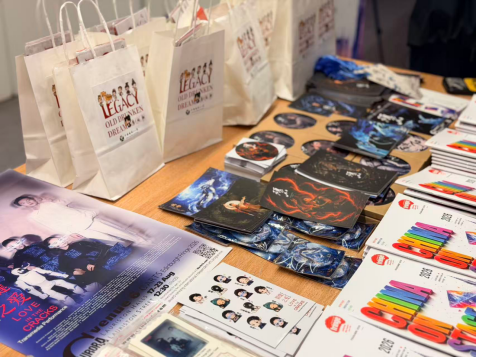
Five Productions: New Chinese Work in an International Context
The performance programme brought together artists and institutions from different parts of China, reflecting the diversity of contemporary Chinese theatre-making — from youth arts education and national performing arts institutions to academy-led experimentation and independent interdisciplinary creation.
Production | Presented by / Origin | Focus |
Mulan 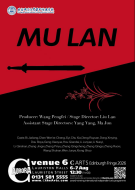
| Beijing Normal University Education Group / BNU Changping Affiliated School | A youth-led musical that brought Chinese school arts education into the international festival environment. |
Legacy 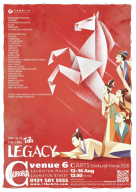
| China Coal Mine Art Troupe | A newly created production presented as part of the troupe’s 2026 international programme. |
Old Drunken Dream 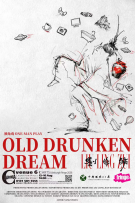
| China Coal Mine Art Troupe | A newly created work extending the company’s contemporary interpretation of Chinese cultural material. |
Love in the Cracks 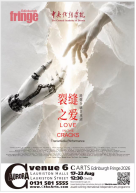 | Directing Department, Central Academy of Drama | An art-and-technology production exploring robotics, theatre, human stories, embodied performance, live image-making and digital media. |
The Becoming Stone 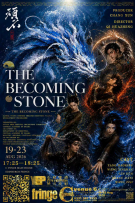
| Selected work of the Guilin Arts Festival Global Chinese Young Theatre Directors Talent Programme | An interdisciplinary work combining physical performance with real-time tracking, interactive visuals and particle-based imaging technologies. |
Two productions in particular demonstrated the increasingly important relationship between performance and emerging technology. Love in the Cracks explored the meeting point between robotics and theatre, combining human stories and embodied expression with live video and digital elements. Rather than treating technology as decoration, the work used it as part of the dramaturgical language, opening up questions about identity, intimacy, presence and the future of theatrical storytelling.
The Becoming Stone similarly challenged conventional stage forms. The production brought performers’ physical expression into dialogue with real-time tracking, interactive moving images and particle imaging. Through this integration of body, space and responsive digital systems, the work suggested a stage language in which technology is not separated from performance, but reacts to it and evolves with it in real time.
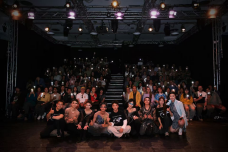 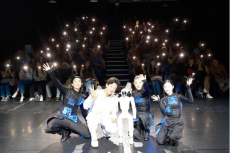
The Becoming Stone Love in the Cracks |
More Than “Going Global”: Entering the International Theatre Ecosystem
For ETA and EIDA, bringing Chinese productions to Edinburgh is not simply about exporting finished work. The more important ambition is to help Chinese creators enter the international theatre ecosystem itself — to experience how work is received by audiences from different cultural backgrounds, to hear professional feedback, to understand international programming and touring structures, and to build relationships with artists and organisations beyond China.
Edinburgh is uniquely valuable in this respect. During the festival period, artists, programmers, producers, critics, cultural organisations and audiences from around the world are concentrated in one city. This makes the festival not only a place of presentation, but also a place of observation, conversation, experimentation and professional development. For Chinese artists, the experience of being present in this environment can directly inform future creative decisions, broaden international perspectives and strengthen the capacity to make work that can travel across cultures without losing its artistic identity.
The Jingshi Cup Exhibition at Edinburgh City Chambers
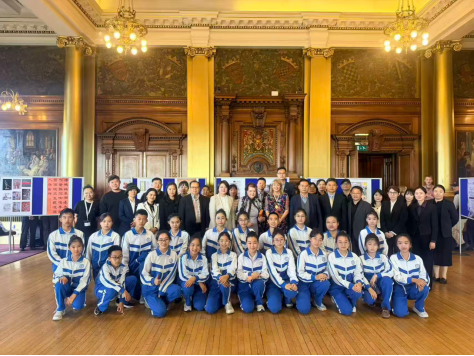
From 5 to 12 August 2026, the Jingshi Cup Award-Winning Arts Education Exhibition was presented at Edinburgh City Chambers. The week-long exhibition brought together outstanding visual art and video works created by students and teachers from across China, placing arts education alongside the performing programme as an equally important part of the season’s international cultural exchange.
Presenting the exhibition in one of Edinburgh’s most recognisable civic spaces gave the works a context that was both public and international. The exhibition was encountered not only by invited education and cultural representatives, but also by local residents, visitors and guests from political and business communities. Viewers responded positively to the breadth of imagination, technique and cultural perspective represented in the works, while the mix of student and teacher contributions offered a wider picture of how arts education is being practised across different schools and regions in China.
The exhibition also helped challenge a narrow understanding of international educational exchange. Rather than relying only on institutional meetings or formal presentations, it allowed creative work itself to become the means of communication. Images and moving-image pieces could be understood intuitively across language barriers, creating direct encounters between young people’s ideas in China and audiences in Edinburgh. In this sense, the exhibition became both a showcase and a conversation: a way for Chinese arts education to be seen, discussed and connected to a broader international cultural context.
Jingshi Cup exhibition at Edinburgh City Chambers 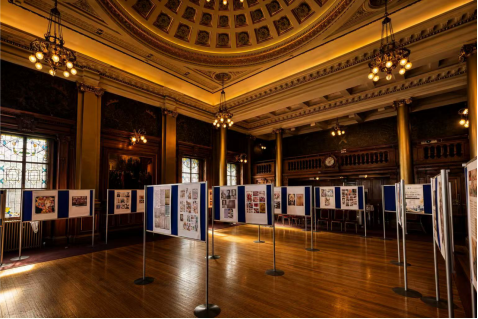
|
China On Stage 2026: Building International Industry Connections
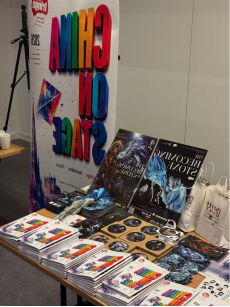
A central part of the 2026 programme was China On Stage 2026, an international performing arts industry exchange held in Edinburgh during August. The event brought together representatives from the British Council’s China office, Creative Scotland, the Edinburgh festivals, Korea’s Artigo, Canada’s Les Foutoukours and other international arts organisations and practitioners.
Discussion focused on practical pathways for international touring, co-production, artist exchange and future collaboration. For participating Chinese artists and organisations, this was an important step beyond the performance itself. It created the opportunity to introduce work directly to people involved in programming, producing and cultural exchange, while also developing a clearer understanding of what international partners look for when considering new projects.
At the same time, China On Stage was designed as a two-way platform. It was not only about asking how Chinese work could reach more international stages; it also asked how relationships could be developed over time, how international artists might work with Chinese partners, and how future projects could be created collaboratively from the outset rather than exchanged only after completion.
China On Stage 2026 industry exchange / networking 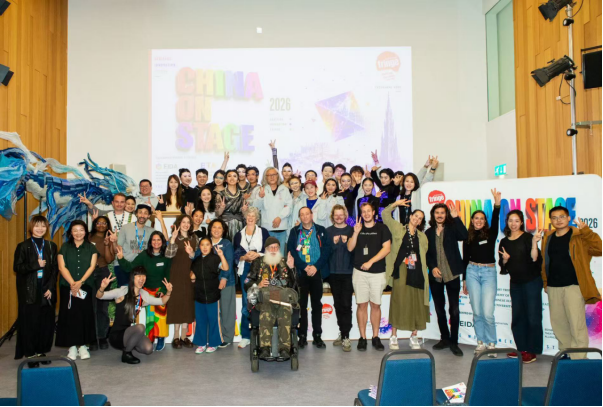
|
Global Education Futures Forum: Internationalisation, Innovation and Collaboration for the Future
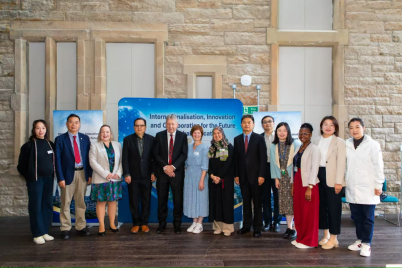
Education formed another major strand of the 2026 Edinburgh programme. On 7 August, the Global Education Futures Forum was successfully held in Edinburgh under the theme “Internationalisation, Innovation and Collaboration for the Future of Global Education.” The forum was jointly organised by the University of Edinburgh’s Internationalisation Futures Network (IFN), the Beijing Normal University Education Training Centre and the Beijing Normal University Education Group, with support from Moray House School of Education and Sport and Edinburgh College of Art at the University of Edinburgh.
The forum was conceived as a high-level international platform linking universities, school education organisations, researchers and frontline practitioners from China and the UK. Educators from a number of Beijing Normal University affiliated and experimental schools travelled to Edinburgh to participate, sharing recent practice in interdisciplinary curriculum design, drama education, scientific literacy and innovation in arts education. In doing so, the forum brought discussions of internationalisation into direct contact with the everyday realities of teaching, curriculum development and student learning.
Professor Peter Mathieson, Principal and Vice-Chancellor of the University of Edinburgh; Professor Carol Campbell, Head of Moray House School of Education and Sport; Professor Hu Zhifeng, Dean of the School of Arts and Communication at Beijing Normal University; Councillor Amy McNeese-Mechan of the City of Edinburgh; and Xing Zhongmei, Vice President of Beijing Normal University Education Group and Deputy Director of the Beijing Normal University Education Training Centre, delivered remarks addressing the forum’s central themes. Together, their contributions framed internationalisation not as a one-way transfer of knowledge, but as an ongoing process of dialogue, institutional partnership and shared experimentation.
The forum also reinforced a key principle running through the wider 2026 programme: the relationship between art, education and international exchange is strongest when these fields are connected rather than separated. Theatre, visual culture and arts education can provide practical spaces in which institutions and individuals test new ways of learning from one another.
Global Education Futures Forum, 7 August 2026 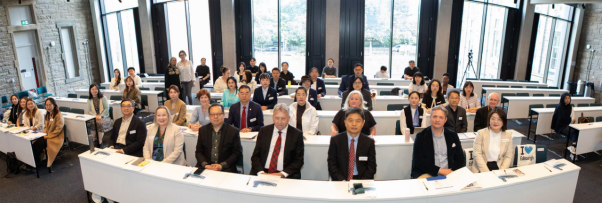
|
From Individual Projects to a Sustainable Platform
Through the process of developing these collaborations, producers Ashley Chang and Christine Dong increasingly recognised that the long-term international impact of Chinese work cannot be built through isolated projects alone. A single production may travel successfully, but sustainable influence requires an infrastructure that can support artists before, during and after an international presentation — helping them find partners, understand local contexts, build professional relationships and identify the next opportunity.
It is from this need that Edinburgh Theatre Alliance (ETA) has continued to take shape. Working alongside EIDA, ETA is developing as a bridge between Chinese artists and international arts organisations: a platform through which Chinese work can access international presentation opportunities, while artists and institutions can also enter broader networks of touring, co-production, research, education and professional exchange.
The aim is not to create a one-directional “export” channel. Instead, ETA and EIDA are working towards a reciprocal model in which projects can move in both directions, partnerships can continue beyond a single festival season, and artistic relationships can grow into new commissions, shared research, co-productions and long-term institutional collaboration.
Looking Ahead to 2027: From Edinburgh to Beijing
In 2027, ETA and EIDA plan to extend this work through an Edinburgh Showcase in Beijing, bringing selected outstanding productions from the Edinburgh festivals to audiences in China. Under the idea “From Edinburgh to Beijing,” the showcase is intended to give Chinese audiences access to distinctive international work without needing to travel abroad, while also creating a new meeting point for visiting artists, Chinese theatres, producers, cultural organisations and potential co-production partners.
This next stage is significant because it completes the circle of exchange. The 2026 programme brought Chinese work, artists and educators into Edinburgh; the 2027 showcase will bring part of Edinburgh’s international artistic energy back to China. In doing so, ETA and EIDA hope to establish a more continuous cultural corridor between the two places — one that supports touring in both directions and encourages relationships that are artistic, educational and institutional at the same time.
Alongside the showcase, Ashley Chang and Christine Dong intend to use Edinburgh’s international arts platform to encourage more Chinese artists to enter co-productions and cross-cultural collaborations with festivals, venues and artists overseas. This means supporting projects earlier in their development, helping partners find one another, and creating opportunities for artistic ideas to be shaped collaboratively rather than simply transferred from one market to another.
A Wider Road for Chinese Work Internationally
The 2026 season demonstrated what can happen when performance, education, visual arts and professional networking are treated as parts of the same international strategy. Five productions reached new audiences; an exhibition created a public window onto Chinese arts education; a global forum connected education leaders and practitioners; and China On Stage brought artists into direct dialogue with international cultural organisations and potential partners.
Behind every international appearance sits a much larger network of work: producing, coordination, translation, technical adaptation, audience development, relationship-building and trust. It is this often-invisible infrastructure that allows a production to move from one country to another — and, more importantly, allows an artist to return with stronger networks, broader experience and new creative possibilities.
ETA and EIDA will continue to invest in that infrastructure. As more Chinese work reaches international stages, and as more international work and artists are connected back to China, the route between the two creative ecosystems can become wider, more reciprocal and more sustainable. The ambition is not only to take more work abroad, but to build the conditions in which meaningful international collaboration can continue year after year.
|
FROM CHINA TO EDINBURGH. FROM EDINBURGH TO BEIJING.
BUILDING A LONG-TERM PLATFORM FOR ARTISTIC EXCHANGE. |